
Gentex Q3 2026: content-per-vehicle strategy offsets weak production
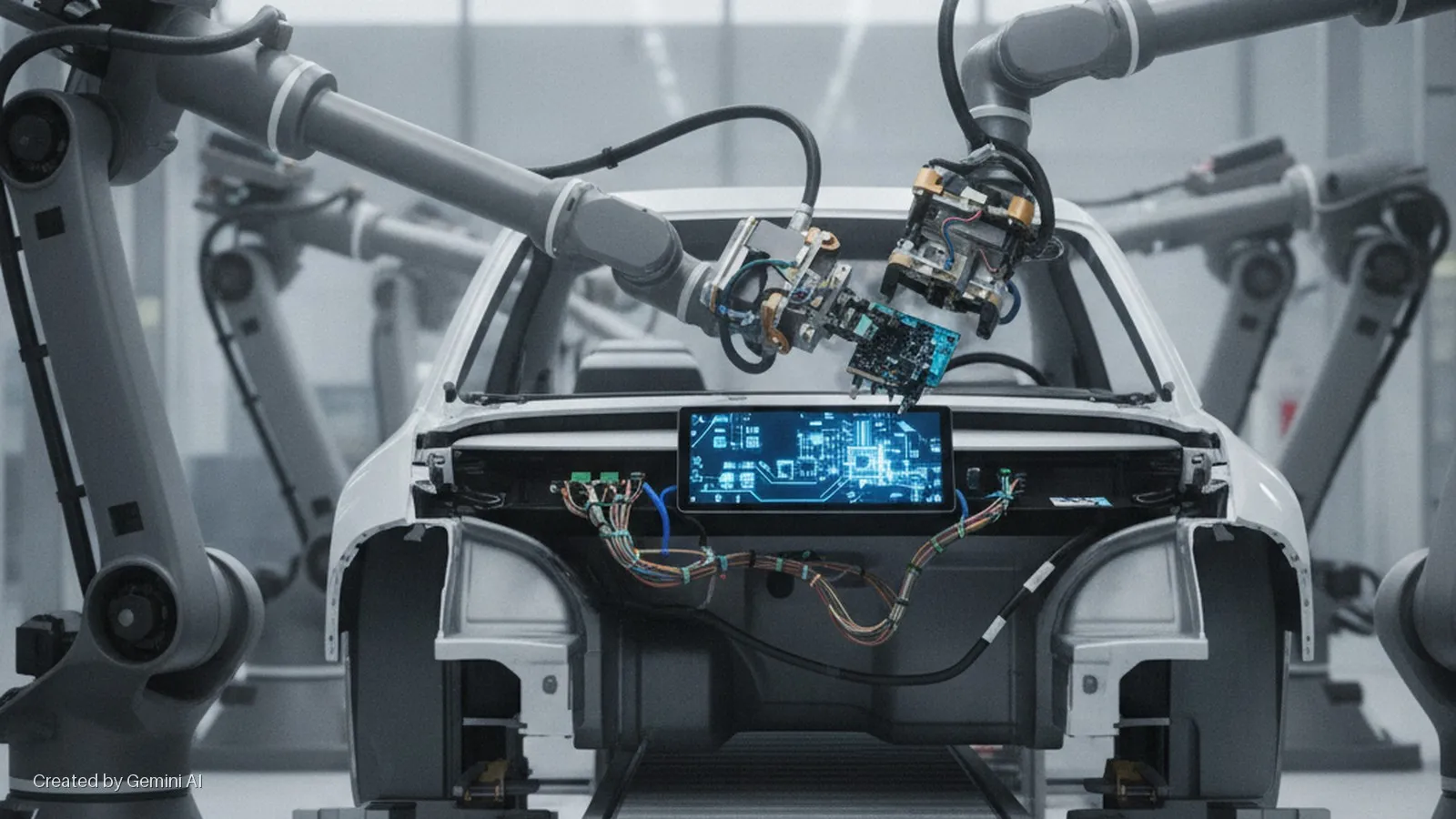
Gentex Corporation, the Michigan-based supplier of digital vision systems, dimmable glass, and connected-car electronics, reported third-quarter 2026 net sales of $647.7 million, marginally below the $655.2 million it posted in the same period a year earlier. The result came in roughly $35 million short of the company's own opening forecast, hit by delayed customer programme launches and continued weakness in China, yet the underlying story is one of a supplier deliberately rewriting its growth equation: shift revenue away from vehicle unit counts and towards the technology content carried inside each car.
North American automotive revenue rose approximately 3% year on year even as regional light vehicle production fell 5%, a gap the company describes as 800 basis points of outgrowth. Europe delivered 13% growth when the previously announced Volkswagen programme loss is stripped out. Globally, Gentex grew automotive revenue around 2% against a backdrop of more than 2% market-wide production decline. The arithmetic points to a company extracting more value per vehicle shipped, a thesis CEO Steve Downing has been pushing for several quarters.
Diversification gathering pace
Beyond the car itself, Gentex's non-automotive lines are becoming a more material part of the story. Premium Audio net sales reached $54.7 million in the quarter, up 27% year on year. The broader "Other Products" grouping, which spans aerospace components, biometrics, fire protection, and aftermarket accessories, grew 5%, with aerospace revenues alone up 135% and fire protection up 36%. Collectively, non-automotive revenue now represents 15% of total company revenue, up from roughly 12% in the third quarter of 2025.
The quarter also produced a strategically notable contract win: Gentex's first printed circuit board assembly (PCBA) award, with production scheduled to begin in 2029. PCBA manufacture sits at the intersection of precision electronics and automotive-grade quality control, and the win signals an intention to move further up the electronics supply chain rather than remain purely a components assembler.
Gross margin slipped to 33.4% from 34.4% a year ago, squeezed by higher precious metal costs embedded in bill-of-materials and by the operating-leverage hit from the sales shortfall. Full-year 2026 gross margin guidance has been trimmed to 34.0%–34.5%, down from a prior range of 34.5%–35.5%, with management citing $10 million to $15 million of incremental commodity cost increases expected in the fourth quarter, with customer reimbursement not anticipated until the first half of 2027.
Convergence read-across: electronics supply chains under pressure
The commodity and component pressures Gentex is flagging carry implications beyond a single automotive supplier's margin line. Management explicitly called out tight supply of memory chips and other electronic components as a constraint affecting cost and availability across the electronics industry broadly. For cross-sector observers, this echoes dynamics visible in consumer electronics, defence electronics procurement, and data-centre build-out pipelines, all of which are competing for overlapping pools of advanced components. Automotive suppliers historically ranked below hyperscalers and smartphone OEMs in the semiconductor supply pecking order; as vehicles become rolling compute platforms, that pecking order is being contested.
On capital allocation, Gentex repurchased $132.6 million of its own shares during the quarter at an average price of $23.44, bringing the year-to-date buyback total to $270.2 million. With $2.80 billion to $2.90 billion in 2027 revenue guidance maintained despite a projected 1% decline in production across its primary markets, the company is betting that content intensity, new product launches including the dimmable visor scheduled for late 2027, and the nascent PCBA business will together outpace the underlying vehicle cycle. For macro investors watching the intersection of automotive technology and electronics supply chains, Gentex's trajectory offers a live read on whether premium in-vehicle content can sustain pricing power as the broader vehicle market softens.