
DFT wins $500m counter-drone IDIQ to shield US forces globally
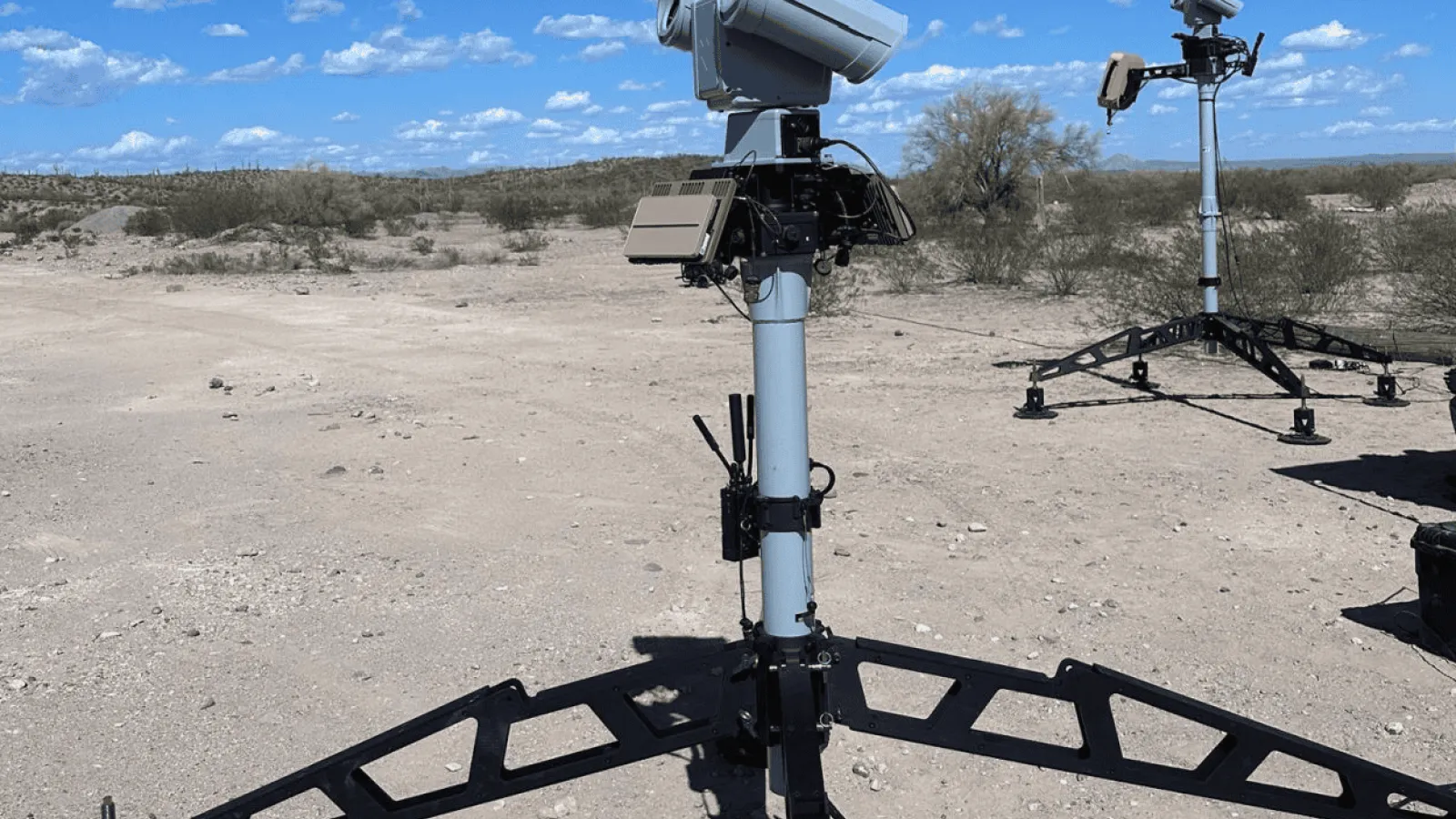
Digital Force Technologies (DFT), a San Diego-based defence technology company, has secured a $500m Indefinite Delivery, Indefinite Quantity (IDIQ) contract from Joint Interagency Task Force 401 (JIATF-401) to supply counter-unmanned aerial systems capabilities under the US military's Domestic Shield programme. The award places DFT's SeraphimOS platform at the heart of a rapidly expanding mission category: autonomous, software-defined drone defence that must evolve as fast as the threats it counters.
The contract covers both Continental United States (CONUS) and overseas (OCONUS) requirements, supporting force protection, base defence and counter-UAS operations globally. JIATF-401 was stood up specifically to accelerate layered drone-defence procurement, and the IDIQ structure gives the task force a streamlined ordering mechanism to push capabilities to warfighters without the delays typical of programme-of-record acquisitions.
SeraphimOS and the edge-AI kill chain
DFT's core differentiator is SeraphimOS, an open-architecture, edge-based software stack that fuses data from multiple sensors, autonomously classifies threats and delivers actionable outputs in real time. The system supports the full counter-UAS kill chain from detection and tracking through to kinetic and non-kinetic engagement. Crucially, its open architecture avoids a closed, single-vendor technology stack, allowing operators to integrate new sensors, effectors and third-party systems as mission requirements shift.
Justin MacLaurin, DFT's President and CEO, framed the contract in explicitly evolutionary terms. "The UAS threat is evolving at an extraordinary pace," he said, "and defending our forces and critical infrastructure requires systems that can evolve just as quickly." U.S. Army Brigadier General Matt Ross, director of JIATF-401, echoed that urgency: the task force's streamlined contracting framework is designed to "cut through red tape and rapidly deliver state-of-the-art counter-UAS solutions into the hands of warfighters."
That procurement philosophy matters as much as the technology itself. IDIQ vehicles of this scale signal a strategic intent to industrialise counter-UAS at volume rather than deploy one-off bespoke solutions.
Convergence: autonomous systems, AI at the edge, and defence procurement reform
The DFT award sits at the intersection of several converging forces that extend well beyond a single defence contract. First, the proliferation of low-cost commercial drone technology has collapsed the barrier to aerial attack, compelling militaries to treat counter-UAS not as a niche capability but as a foundational layer of base defence. That shift is reshaping defence procurement priorities across NATO allies, not only in the US.
Second, SeraphimOS represents the practical deployment of what the AI community would describe as edge inference: autonomous threat classification running on hardware close to the operational environment rather than in a distant data centre. The same architectural pattern is accelerating across robotics, critical-infrastructure monitoring and industrial automation, meaning the software stack DFT has built for military drone defence shares intellectual DNA with platforms being developed for entirely civilian sectors.
Third, the IDIQ mechanism itself is a case study in how the Pentagon is attempting to restructure acquisition. Traditional programme-of-record contracts take years from requirement to fielding; IDIQ vehicles allow iterative ordering as threat landscapes evolve. That shift towards agile, software-centric procurement has implications for the broader defence-technology investment landscape, where venture and growth-equity capital continues to flow into companies able to demonstrate rapid fielding credentials rather than legacy platform integration.
For cross-sector investors, the DFT contract signals continued budget resilience for autonomous-systems and edge-AI plays within US defence spending, even as other discretionary lines face pressure. The underlying technology thesis, open-architecture edge software that can be reconfigured faster than adversarial threats adapt, is one increasingly shared by commercial robotics and critical-infrastructure security investors watching the defence sector for proof points they can apply elsewhere.