
Kraig Labs ships first commercial spider silk order to sports brand
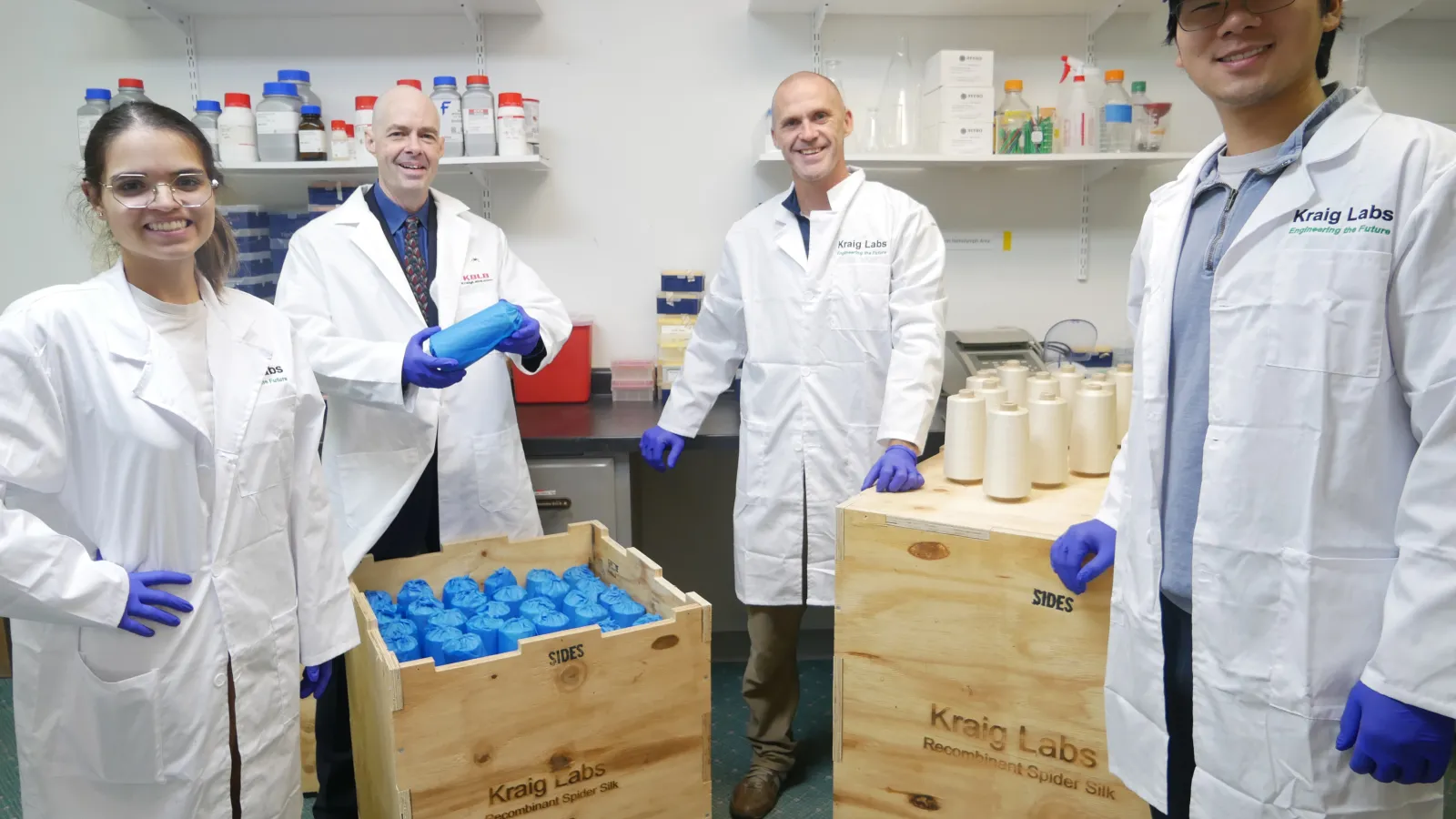
Kraig Biocraft Laboratories has shipped its first commercial order of recombinant spider silk yarn to an undisclosed globally recognised performance sports brand, marking the point at which a material long celebrated in research papers begins the far harder journey through customer validation and product integration.
The shipment is deliberately small, a confidential pilot programme rather than a volume contract, but the strategic signal is clear. Kraig's silk has cleared a threshold that most advanced-materials start-ups never reach: a paying customer has ordered it to specification and intends to build a product around it.
From laboratory curiosity to commercial material
The material's appeal is rooted in an unusual combination of properties. Spider silk is simultaneously strong, tough, flexible and lightweight, a set of characteristics that synthetic fibres typically trade off against one another. Kraig produces the yarn through genetically engineered silkworms that express recombinant spider-silk proteins, allowing it to leverage existing silk-reeling infrastructure rather than requiring entirely new manufacturing lines.
The company reported producing more than 1.3 metric tons of spider-silk cocoons in a single month earlier this year, a figure that begins to move the conversation away from laboratory curiosity and towards supply reliability. Prior testing, the company says, confirmed that commercially produced yarn retains the strength and toughness demonstrated in earlier small-batch work.
Kim Thompson, CEO and founder, framed the programme in competitive terms: "High-performance sport is where materials prove themselves. When a brand at this level puts our material to the test, the results speak for themselves."
The backdrop matters. Textile Exchange recorded global fibre production at a record 139 million metric tons in 2025, with polyester accounting for 59% of that total and 88% of polyester output derived from virgin fossil-based sources. Any new performance fibre must simultaneously demonstrate technical superiority and production consistency to displace that incumbent. Kraig has not yet done either at scale, but the pilot programme is the first external test of whether it can.
The convergence play: advanced materials across sector boundaries
The sports-brand shipment is the visible tip of a broader multi-sector materials thesis. Kraig's own roadmap lists defence and protective equipment, aerospace and aviation components, automotive materials, medical devices and wound-care applications as target markets, each sector placing a distinct premium on the lightweight-plus-tough combination that polyester and carbon fibre cannot fully deliver together.
In defence, lightweight materials that maintain ballistic or load-bearing performance carry obvious procurement value, particularly as armed forces pursue weight reduction across individual equipment and platform components. In aerospace and automotive, the calculus is different, gram-for-gram mass reduction translates directly into fuel or energy efficiency, making high-performance composites a structural cost issue rather than merely a premium feature.
The medical-device and tissue-engineering angle adds a biotech-meets-materials dimension that could attract a separate class of capital entirely. Researchers have investigated spider-silk proteins for drug delivery, wound healing and scaffold materials for tissue engineering, applications that carry regulatory hurdles but correspondingly high margins and long-term contract structures.
Underpinning all of this is Project Atlas, Kraig's gene-library programme designed to engineer silk with tuneable properties. Rather than producing one standardised fibre, the platform aims to allow future variants to be optimised for tensile strength, elasticity, impact resistance or other characteristics depending on the end application. If that capability matures, it repositions Kraig from a single-material supplier into an engineered-biologics platform, a meaningfully different valuation story for investors tracking convergence between synthetic biology and advanced manufacturing.
Capital interest in bio-based advanced materials has been building alongside broader sustainability mandates in procurement, but Kraig's OTCQB listing and micro-cap profile mean institutional capital has largely stayed on the sidelines pending commercial proof points. The sports-brand pilot is the first such proof point. A successful product integration, even in a limited run, would likely accelerate conversations with defence primes, aerospace tier-ones and medical OEMs simultaneously, compressing what is normally a sequential sector-by-sector validation process into a parallel one.
The first shipment does not establish recurring revenue, broad adoption, or success in any of those adjacent markets. Those outcomes require further development and, in regulated sectors, formal qualification. But it confirms that recombinant spider silk has crossed from scientific achievement into the territory of customer-qualified material.