
Isomorphic Labs closes $5bn Series C to scale AI drug design
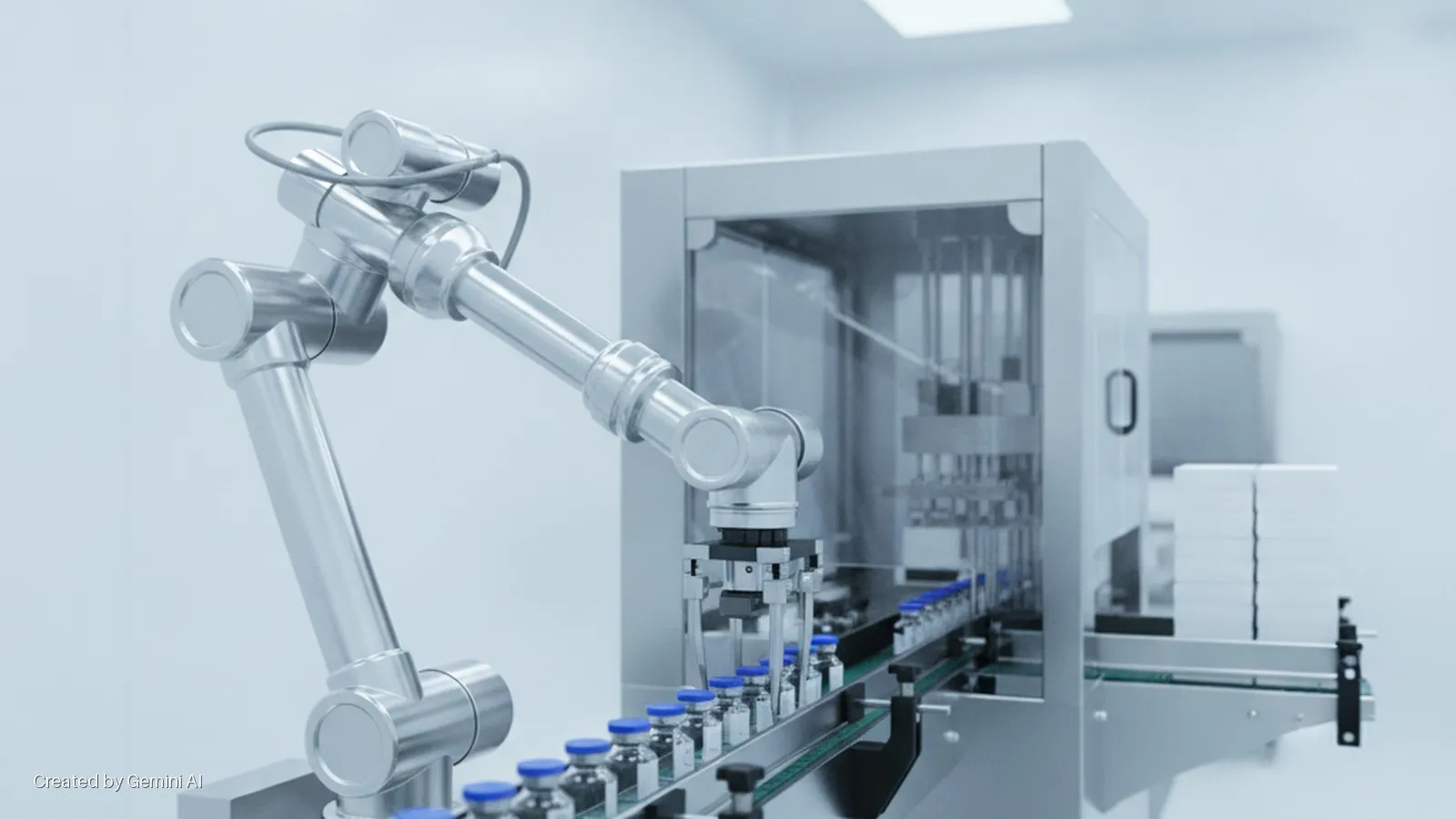
Isomorphic Labs, the London-headquartered AI drug design company founded by Sir Demis Hassabis, has closed a $5 billion Series C financing round, co-led by Greenoaks and Sequoia Capital. Andreessen Horowitz joined as a new investor alongside Alphabet, which maintained significant participation alongside returning backers including Thrive Capital, MGX, GV, CapitalG, Temasek, and the UK Sovereign AI Fund. The oversubscribed round is a signal that institutional capital is now betting at scale on the thesis that AI can industrialise pharmaceutical discovery, a process that has historically cost upwards of $2 billion and taken more than a decade per approved drug.
The proceeds will fund three parallel tracks: continued development of Isomorphic's proprietary drug design engine (IsoDDE), expansion of its internal and partnered therapeutic pipeline, and construction of what the company describes as global AI-led bioengineering infrastructure. The company has reported positive preclinical results across oncology and immunology programmes, and says it is positioning several candidates for clinical entry. IsoDDE works across multiple therapeutic areas and drug modalities, using foundational simulation models to explore chemical space at a scale no traditional in-silico method can replicate.
A new capital tier for AI-biotech convergence
The sheer size of the round reframes where Isomorphic sits in the competitive landscape. For context, Recursion Pharmaceuticals raised roughly $150 million in a 2021 IPO; Insilico Medicine closed a $95 million Series D in 2023. A $5 billion private round places Isomorphic in a different financing category entirely, closer to late-stage semiconductor or cloud-infrastructure raises than to typical biotech Series C tranches. That the round was oversubscribed suggests investor appetite exceeds even this headline figure.
"Our drug design engine is generating molecules with unprecedented precision and speed," said Sir Demis Hassabis, Founder and CEO. "This round enables us to accelerate our progress: building foundational biology models, deepening our systemic disease understanding, and driving our first therapeutic programs towards clinical trials."
Neil Mehta, Founder and Managing Partner at Greenoaks, framed the bet in optimisation terms: "Discovering and developing new medicines is an optimisation challenge of almost infinite scale. Isomorphic is transforming that journey, building deep learning systems that can predict complex biological behaviours with remarkable accuracy."
Cross-sector read-across: compute, capital, and clinical infrastructure
The Isomorphic raise is not purely a biotech story. The company's stated intent to build "global AI-led bioengineering infrastructure" implies a substantial compute footprint, GPU clusters, proprietary data pipelines, and eventually wet-lab integration, that places it in direct competition for the same sovereign and institutional capital flowing into hyperscale data centres and AI infrastructure plays across the Gulf, UK, and US.
The presence of the UK Sovereign AI Fund is particularly notable. The Fund's participation signals that the British government views AI-native drug discovery as a strategic national asset, not merely a commercial venture. This sits within a broader pattern of sovereign capital moving into the intersection of AI compute and life sciences: MGX, the Abu Dhabi-backed technology investor, is also a returning backer, linking the raise to Gulf sovereign AI ambitions that have already reshaped data centre investment across the MENA region.
For cross-sector investors, the second-order implications extend to clinical development infrastructure. If Isomorphic's pipeline progresses to trials, it will generate demand for contract research organisations, clinical-data platforms, and regulatory advisory capacity that understands AI-discovered molecular profiles, an area where existing frameworks remain unsettled. The FDA has yet to establish a definitive review pathway for drugs whose lead compounds were identified primarily through AI simulation rather than traditional medicinal chemistry. How regulators in the US, UK, and EU respond to Isomorphic's first clinical candidates may well set the template for the entire sector, making this round as consequential for policy as it is for capital markets.