
Domino Data Lab and EPAM partner to scale GxP AI in biopharma
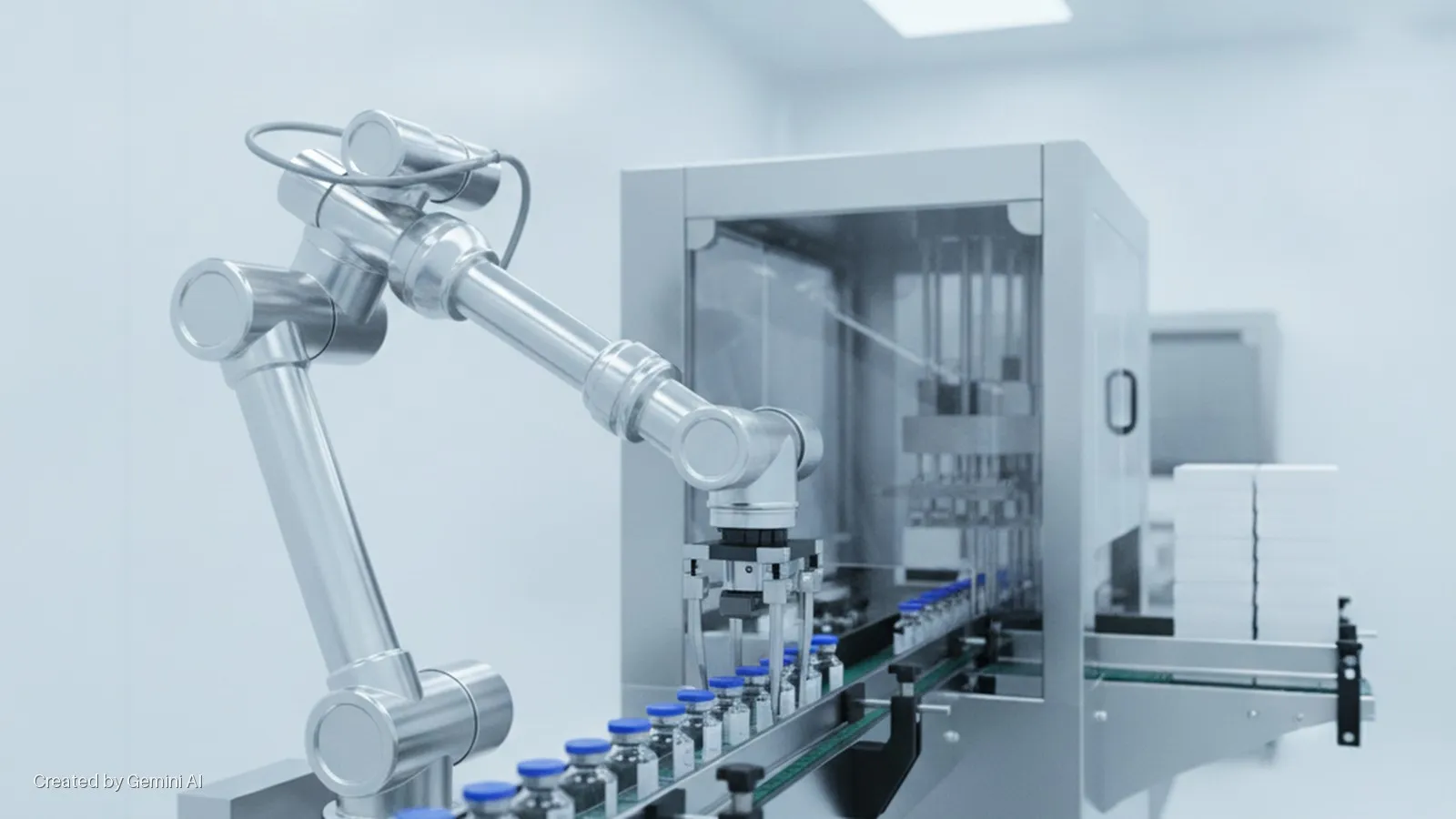
Domino Data Lab and EPAM Systems have announced a strategic partnership designed to move AI out of experimental sandboxes and into validated, compliance-grade production environments across the life sciences sector. The collaboration pairs Domino's enterprise AI platform with EPAM's global engineering capabilities, embedding specialist teams directly within customer organisations to deploy GxP-validated models and governed analytics at scale across biopharma R&D.
The timing reflects a structural frustration that has built up across the pharmaceutical industry. According to Domino's own industry research, the primary obstacles blocking AI adoption are not capability gaps but operational ones: legacy system fragmentation, the demanding GxP revalidation cycle that governs pharmaceutical processes, and a patchwork of governance requirements that differ by team, therapeutic area, and geography. The partnership is structured specifically to address those integration and compliance layers rather than the underlying model science.
From pilot purgatory to enterprise production
EPAM's forward-deployed engineers will work alongside Domino's equivalents, embedding with customer teams to modernise legacy code, integrate Domino's platform into heterogeneous IT architectures, and compress deployment timelines. The intended use cases span the full biopharma lifecycle: improving candidate selection by running AI agents and large language models against large-scale genomic datasets; modernising statistical computing environments to unify SAS, R, and Python workflows ahead of regulatory submissions; and standardising real-world evidence datasets on a governed analytics layer to accelerate observational research.
"Pharma's AI opportunity doesn't live in one function, and every team it touches has its own systems, timelines, and compliance requirements," said Greg Killian, Senior Vice President and Global Head of Life Sciences and Healthcare at EPAM. "EPAM and Domino are built for that complexity, helping organisations move AI into validated production no matter which team is building it."
The partnership does not announce a funding event or a specific deal value, but it reflects a broader capital and talent trend: platform vendors and systems integrators are formalising joint go-to-market structures specifically for highly regulated industries, where implementation risk is as commercially significant as the underlying technology.
The convergence read-across: compute, compliance and capital
For the cross-sector strategist, the story is less about any single partnership and more about where AI industrialisation is happening fastest. Life sciences is emerging as one of the most technically demanding testbeds for enterprise AI precisely because GxP compliance, regulatory submission timelines, and the multi-year drug development cycle leave almost no tolerance for model drift or governance failure. Solving AI deployment at that standard of rigour is a template that translates directly into other heavily regulated verticals: financial services stress-testing environments, defence procurement systems, and nuclear energy operations all face analogous barriers between the pilot and the production-validated state.
From a capital-allocation perspective, Domino's investor base is notable. Backers include Sequoia Capital, Coatue Management, NVIDIA, Snowflake, and UBS, a spread that cuts across pure venture, semiconductor infrastructure, data infrastructure, and institutional finance. That mix signals investor conviction that the enterprise AI platform layer in regulated industries is a durable commercial category, not a transitional consulting wedge. EPAM, meanwhile, brings a global engineering headcount and an established presence across Central and Eastern Europe, the US, and Asia-Pacific, giving the partnership genuine geographic reach into markets where biopharma outsourcing is already concentrated.
The deeper question for investors watching this space is whether platform-plus-integrator partnerships of this type will consolidate into fewer, deeper relationships as biopharma CIOs prioritise reducing the number of AI vendors they need to validate. If they do, first-mover partnerships that can demonstrate GxP-compliant production deployments at enterprise scale will carry a significant incumbent advantage in the next procurement cycle.