
Embraer posts record Q3 revenues of $2.3bn on defence surge
Embraer, the Brazilian aerospace group listed in New York and São Paulo, has reported record third-quarter revenues of US$2.3 billion, a 17% year-on-year increase that the company says was driven by all four of its business units. The results have prompted management to raise its full-year revenue guidance to a range of US$8.4 billion to US$8.6 billion, up from the previous band of US$8.2 billion to US$8.5 billion. Free cash flow guidance has been revised sharply upward, to US$700 million or above from a prior floor of US$400 million.
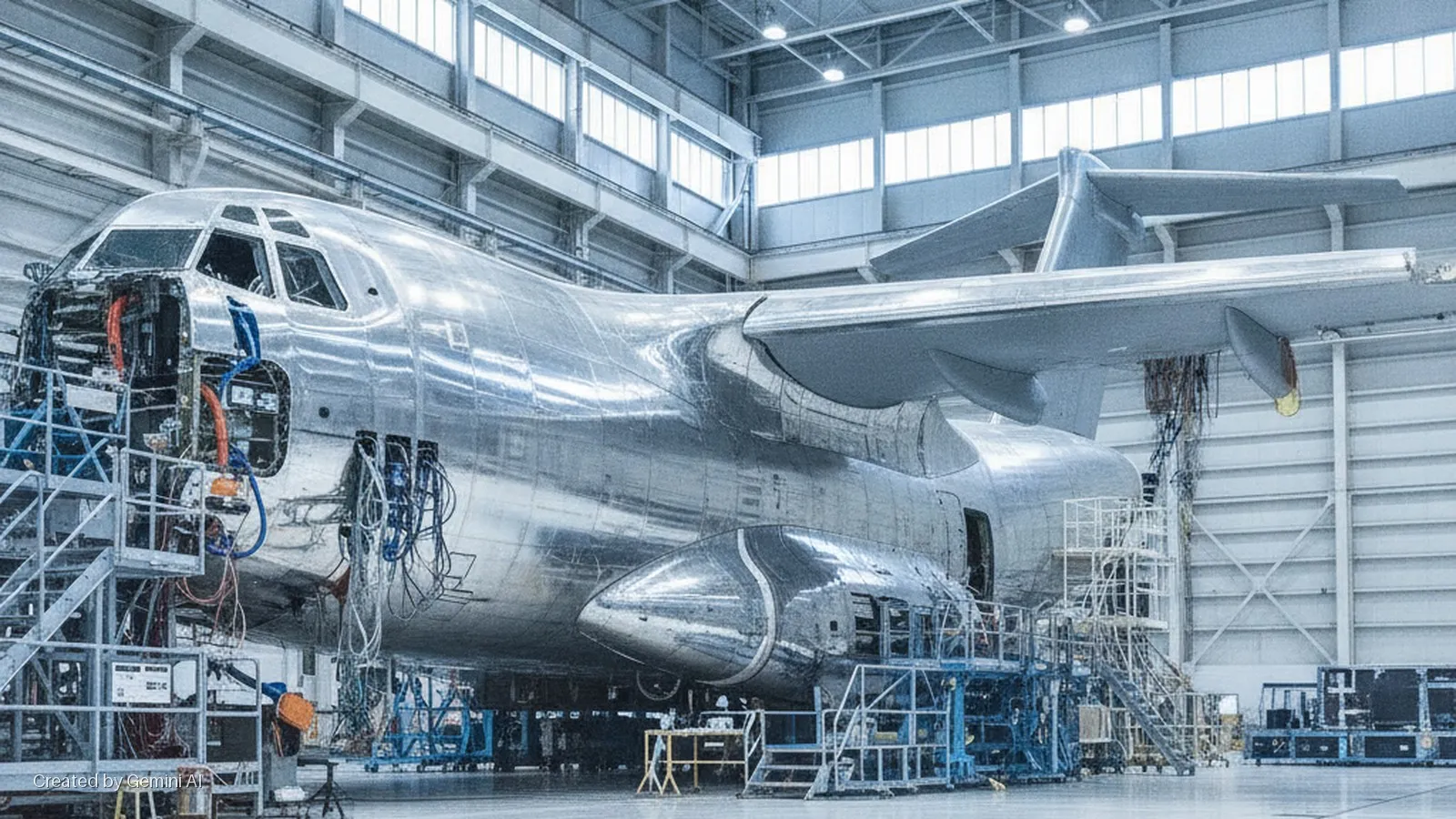
The numbers confirm a structural shift in Embraer's revenue mix that is worth reading carefully. Services and Support, the segment least visible in headline delivery counts, grew 30% year on year to US$638 million in the quarter. Defence and Security expanded 22% to US$341 million, underpinned by accelerating recognition of KC-390 Millennium tanker-transport deliveries. Commercial aviation revenues of US$696 million grew a comparatively modest 13%, while executive jets contributed US$655 million on the strength of pricing and product mix. Taken together, the non-commercial segments now account for more than half of quarterly revenue, a composition that narrows Embraer's traditional dependence on narrowbody airline cycles.
Backlog signals durable demand across segments
The company's total backlog reached a record US$35.7 billion in the quarter, 3% above the previous record set just three months earlier and 14% higher than a year ago. At 66 aircraft delivered in Q3 (22 commercial jets, 41 executive jets, 3 defence platforms), the delivery cadence rose 6% year on year. The pace remains constrained relative to the backlog's scale, which implies a sustained forward-revenue profile well into the second half of the decade. Adjusted EBIT margin expanded from 8.6% in Q3 2025 to 10.9% in the latest quarter, suggesting that operational leverage is beginning to flow through. Adjusted net income, however, fell to US$73.6 million from US$84.3 million, with management citing higher financing and tax costs as the primary drag.
Convergence angle: aerospace defence meets sovereign procurement cycles
Embraer's Defence and Security trajectory matters beyond the aviation sector. The KC-390, a next-generation military transport competing with Lockheed Martin's C-130 on cost and through-life economics, is gaining traction in European and emerging-market air forces at a moment when NATO-aligned governments are expanding defence procurement budgets at a pace not seen since the Cold War. For the cross-sector investor, this positions Embraer at the intersection of two durable capital flows: the post-Ukraine re-armament cycle and the decades-long replacement demand for ageing transport fleets. At the same time, the surge in Services and Support revenues reflects a broader trend across aerospace and defence manufacturers, whereby long-term service contracts are being priced in as recurring, annuity-style income rather than one-off transactions. That shift has significant implications for how defence-adjacent aerospace companies are valued relative to pure-play commercial manufacturers exposed to airline demand volatility.
The near-term risk for Embraer is execution. Its Eve subsidiary, which is developing electric vertical take-off and landing aircraft in the urban air mobility space, is excluded from the revised free cash flow guidance. The separation of Eve's financials underlines that the urban air mobility bet remains a long-dated optionality call rather than a near-term revenue contributor, with capital intensity rising (consolidated capex including Eve was US$219 million in Q3, up from US$153.4 million a year earlier). Whether the maturing Services and Support engine can fund both the KC-390 ramp and the Eve development programme without diluting shareholder returns is the central capital-allocation question heading into 2027.